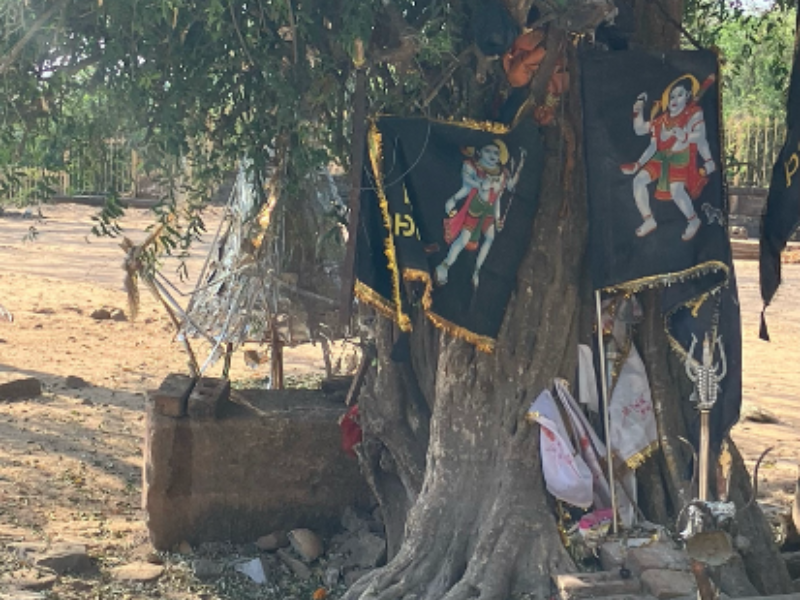
I recently returned from a pilgrimage in Gujarat, India, led by Priyal Shah, who guides the spiritual dimension of our work with HSPs.
We visited temples and sacred sites where people had come for generations with flowers, prayers and longing, and I found myself deeply moved by the felt sense that these places had become alive through centuries of devotion.
One of the things that stayed with me most was the way sacredness can accumulate.
Over many centuries, people come to a shrine, a stone, a tree, a mound, a temple, a place on the land. They arrive with offerings, flowers, prayers, petitions, grief, gratitude, hope. They bow. They sing. They wait. They bring their longing. They bring their devotion. They return, and return again.
And somehow, over time, the place becomes alive.
Not alive in a metaphorical or decorative sense. Alive in the way some spaces hold a palpable presence, an energy. Alive in the way your body feels it before your mind has words. You cross a threshold and something changes. The air feels different. Your nervous system registers it. You know you are in a place that has been loved, addressed, invoked, inhabited by attention.
This moved me profoundly.
Because beneath the religious or cultural forms, there is something here that reaches far beyond pilgrimage sites or temples. It says something about relationship itself.
Things come alive through relationship.
That may sound obvious at first. But I think it is more radical than it seems.
We use words like relationship and friend so casually now that they can lose their force. Relationship can come to mean almost any kind of contact. Friend can mean someone we vaguely know, follow, react to, or occasionally exchange messages with. But what if relationship is something much deeper than contact?
What if relationship is participation in the becoming of the other. And they in us.
I keep coming back to that.
Because if it is true, then relationship is not simply about affection, compatibility, or shared interests and values. It is not only about who we like, enjoy, or feel drawn to. It is also about what we help bring into being through the quality of our presence.
To be in relationship, in the deeper sense, is to affect the conditions under which another life can become more fully itself.
And they do the same for us.
That changes things.
It means relationship is not just a feeling or an alignment. It is a practice.
It is attention.
It is return.
It is staying in contact.
It is allowing depth to gather.
It is giving something enough care that it can begin to live more fully in our presence.
This brings us close to commitment, though perhaps not in the narrow or conventional sense.
Commitment here is not just duty, nor endurance for its own sake. It is not staying where something is harmful, deadening, or one sided. It is not self-abandonment disguised as love. Real devotion without truth becomes distortion. Real care must include boundaries, honesty, and mutuality.
But there is a form of commitment that matters deeply.
It is the willingness to return.
To keep showing up.
To keep paying attention.
To let something deepen rather than endlessly skimming the surface.
To resist the modern habit of treating relationship as disposable, replaceable, or valuable only while it is easy.
Without that, many relationships remain thin. Pleasant perhaps, but thin. They do not gather the density, trust, or aliveness that only repetition and sincerity can create.
This may be especially important for highly sensitive people.
Many HSPs do not long merely for company or interaction. We long for resonance. Mutuality. Depth. The feeling of being met somewhere real. We often sense very quickly when a space is hurried, brittle, performative, or emotionally absent. And we also sense when a place, a person, or a group has substance. When something living is actually there.
Perhaps that is one of the gifts of sensitivity. We notice the field between things.
We notice when a room has been softened by care.
We notice when someone is truly present.
We notice when words are empty and when they are inhabited.
We notice when a community has become more than a collection of individuals and has started to feel like a living body.
This too is sacredness.
Not sacredness as perfection.
Not sacredness as piety.
But sacredness as aliveness brought forth through reverent attention.
I think this is why pilgrimage touched me so deeply.
Because in those sacred places, you can feel what repeated acts of devotion have done. You can feel what has been laid down there over generations. It is as though human beings, by loving something faithfully enough, have helped make it more available, more radiant, more alive.
And perhaps our relationships are not so different.
Perhaps a friendship becomes sacred not because it is intense, but because it has been returned to.
Perhaps a community becomes sacred not because everyone agrees, but because people keep showing up with sincerity and care.
Perhaps a marriage, a family, a circle, even a conversation, becomes sacred when it is inhabited fully enough that something living can emerge between those present.
That feels very different from the way relationship is often framed now.
The modern question is often: what am I getting from this?
Does this still suit me?
Is this efficient, exciting, affirming enough?
But the sacred question may be:
What am I helping to make alive here?
That does not mean never leaving.
It does not mean over giving.
It does not mean sacrificing oneself to keep something going that has lost truth or reciprocity.
But it does ask more of us than convenience.
It asks whether we are capable of reverence.
Whether we can stay long enough for depth to gather.
Whether we can become trustworthy enough for something alive to take root between us.
For me, this is one of the deepest meanings of pilgrimage.
Not simply that there are holy places in the world, though I believe there are.
But that sacredness itself may be relational.
It may arise, deepen, and become palpable through love, through attention, through repeated acts of devotion.
And if that is true, then perhaps the same is true of us.
Perhaps we, too, become more alive through relationship.
Perhaps there are parts of us that only come into being when they are met with steadiness, tenderness, and care.
Perhaps friendship, community, and love are not secondary comforts in a difficult world, but some of the very places where life becomes most fully itself.
Perhaps relationship is not just connection.
It is participation in the becoming of the other.
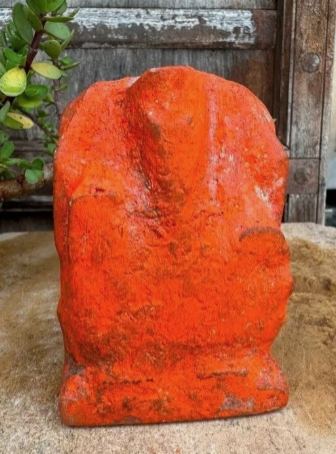
A very old stone statue of Ganesha, worn away from centuries of devotional touch and with each touch, sindoor, the red powder used in acts of devotion, is added.
Over time, eyes may be added to devotional pieces like this, symbolising that it’s not an object but has come to be felt as alive through centuries of attentiveness.