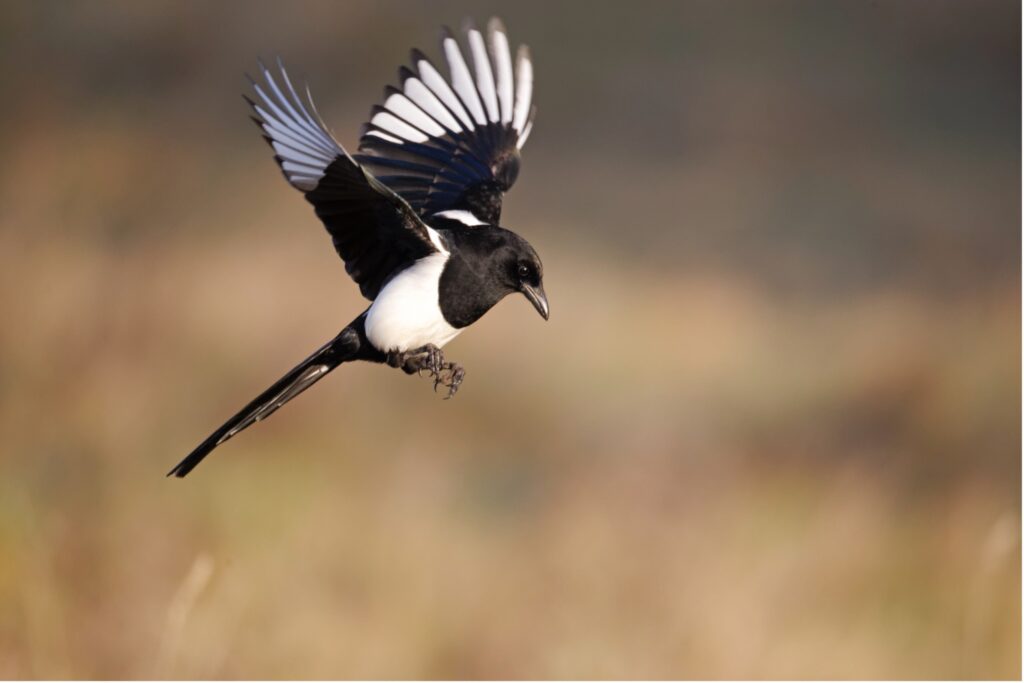
A few days ago, leaving the gym, a magpie flew straight into the side of my car.
In the wing mirror I could see it floundering in the road behind me. There were cars immediately behind me so I could not stop.
And my mind did what highly sensitive minds can do very quickly.
By the time I had driven a little further I had imagined that the bird was badly injured. I imagined it suffering in the road. I imagined another car hitting it. I imagined having to turn round, find it and perhaps put it out of its misery.
I was crying by then.
I turned the car round and went back.
There was no magpie.
There was no bird at the side of the road and no sign that anything had been hit. The most likely explanation was that it had been stunned for a few moments and then flown away.
What interested me afterwards was how much had happened inside me before I actually knew what had happened outside me.
Depth of processing is one of the central characteristics of high sensitivity. We take in information, connect it with other information, think through possibilities and often anticipate what might happen next. It is one of the reasons HSPs can be perceptive, thoughtful and good at spotting consequences that other people miss.
But that strength has a shadow side.
Sometimes checking what might happen turns into predicting what will happen.
A possibility becomes a scenario. The scenario becomes emotionally real. And our nervous system begins responding to something that has not actually happened.
I see this a lot with HSPs. We can play out the difficult conversation before we have had it. We imagine how exhausting an event will be before we arrive. We work through every possible problem before we start something. Sometimes we are already depleted by an experience that exists, so far, only in our minds.
The phrase I have been using for myself is: pause to check, not pause to predict.
Pause to check, not pause to predict.
Perhaps, for those of us whose minds naturally go deep, there is a practice here. Not less curiosity. Not less thought. Just a little more willingness to stay with what is actually happening before rushing ahead to explanation, prediction or certainty.
Try this: before the story runs away
The next time you notice yourself playing out a future scenario, try asking:
• What do I actually know right now?
• What am I imagining or predicting?
• Is there anything I need to do now, or can I wait for more information?
Sometimes the answer may still be that something difficult is happening and you need to act. But sometimes, like my magpie, reality has moved on while your mind is still dealing with the catastrophe it predicted.